When to Visit Iceland
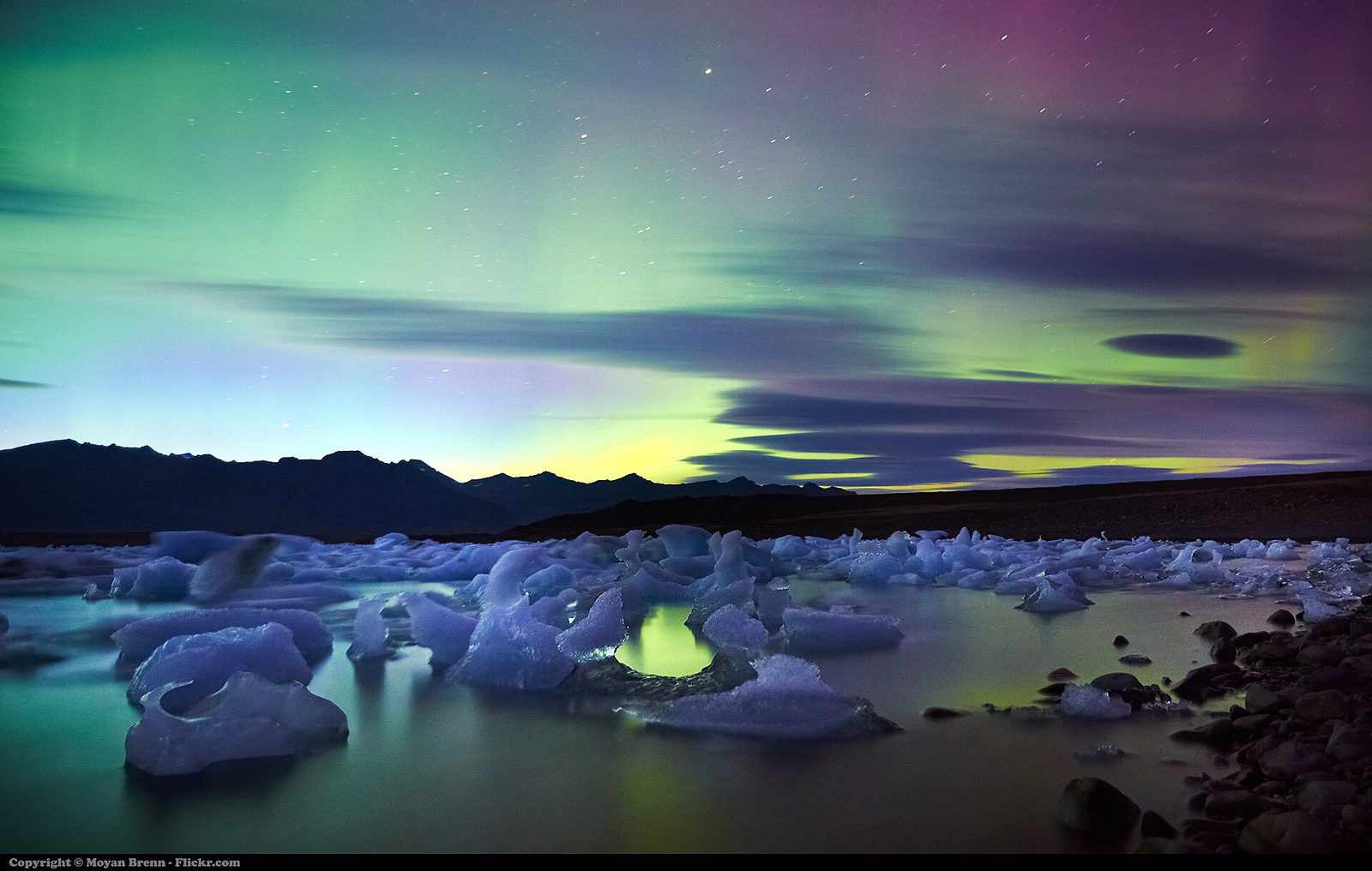
Iceland is a different country by season: 21 hours of daylight in June against four in December, highlands open for barely three months, auroras visible for eight. The best time to visit depends entirely on what you want - so this guide works backwards from experiences to dates. Every figure is checked against the Icelandic Met Office and official sources, and the month guides below go deeper, one month at a time.
Month By Month At A Glance
| Month | Daylight (≈mid-month) | Mean temp (Reykjavík) | What it means for a trip |
|---|---|---|---|
| January | ≈5 h | ≈0 °C | Deep winter; aurora prime time; ice caves; storm disruptions possible. |
| February | ≈8 h | ≈0 °C | Winter with usable daylight; aurora and ice caves continue. |
| March | ≈11 h | ≈1 °C | Brighter winter; last full ice-cave month; aurora until mid-April. |
| April | ≈15 h | ≈4 °C | Spring thaw; puffins return mid-month; aurora season ends. |
| May | ≈18 h | ≈7 °C | Long days, pre-season prices; highlands still closed. |
| June | ≈21 h | ≈10 °C | Midnight sun; F-roads begin opening; peak season starts. |
| July | ≈19½ h | ≈12 °C | Warmest month; whole country open; peak crowds and prices. |
| August | ≈16½ h | ≈11 °C | Full access; puffins leave mid-month; first auroras at month's end. |
| September | ≈13 h | ≈8 °C | Aurora season proper; highlands last call; réttir round-ups. |
| October | ≈10 h | ≈5 °C | Long aurora nights; F-roads closed; first winter storms. |
| November | ≈6½ h | ≈2 °C | Winter begins; ice caves open; quiet and cheap. |
| December | ≈4½ h | ≈0 °C | Shortest days (≈4 h at solstice); festive season; aurora when clear. |
Daylight figures are approximate mid-month values for Reykjavík; temperatures are monthly means rounded from Icelandic Met Office climate data. Inland and northern areas run colder, and highland weather is a category of its own.
Choose By Experience, Not By Month
| If you want… | Come between… |
|---|---|
| Northern lights | Late August – mid-April; longest dark skies November–January |
| Midnight sun | ≈Mid-May – late July (brightest around 21 June) |
| Highland F-roads (Landmannalaugar, Þórsmörk) | Late June – September, opening by inspection |
| Natural ice caves | Under park contracts: no summer tours, season's last tours 30 April, autumn start condition-dependent; usually reliable November – March |
| Puffins | ≈Mid-April – mid-August (gone by September) |
| Whale watching | Year-round from Reykjavík; best April–October, peak June–August |
| Ring Road with a 2WD car | June – September in normal conditions |
| Lowest prices and crowds | November – March, outside Christmas/New Year |
The Four Seasons, Honestly
Summer (June–August) is peak Iceland: the midnight sun, every road and highland track open, whales and puffins, and the highest prices and crowds - book months ahead. Autumn (September–October) is the connoisseur's window: the aurora season starts while roads are still clear, colours turn, réttir sheep round-ups fill the valleys, and prices fall - but the highlands close during it. Winter (November–March) trades daylight for northern lights, ice caves and the lowest costs, with real weather risk and short days; it rewards flexible plans and a winter-ready approach to driving. Spring (April–May) is the quiet in-between: lengthening days, returning birdlife, pre-season prices, and a country that still keeps its highlands shut.
Month Guides
- Iceland in June - Midnight sun - and the driest month of the year; F-roads open by inspection.
- Iceland in July - The warmest month, whole highland network open - and not quite the busiest.
- Iceland in August - The actual peak month: Þjóðhátíð, Culture Night, puffins fledge, first auroras.
- Iceland in September - Aurora season begins, highlands last call, réttir and RIFF.
- Iceland in October - Long aurora nights, autumn storms, the quiet shoulder before winter.
- Iceland in November - Peak aurora darkness, ice caves open, Iceland Airwaves, lowest prices.
- Iceland in December - Solstice days, Yule Lads, and Reykjavík's citizen-fired New Year's Eve.
- Iceland in January - The light returns fast; Þorri and þorrablót; one of the two quietest months.
- Iceland in February - Gains almost three hours of daylight; Winter Lights Festival; Bun Day.
- Iceland in March - The equinox month: the year's biggest daylight gain, prime auroras - and Easter, in some years.
- Iceland in April - Summer by statute: the First Day of Summer holiday, returning puffins, the aurora season's last call.
- Iceland in May - Reykjavík's sunniest month at a third less crowding than June; highlands still shut.
All twelve months are covered. Each guide details weather and daylight, what is open and closed, events with dates, aurora prospects and driving conditions - all sourced and dated, with 2027 dates given where organisers have published them and stated as rules where they have not.
Choosing a trip around the aurora? The northern lights guide sets the darkness, cloud and moon figures for every month side by side, computed from Met Office data - and explains why no month is the clear winner.
If you are choosing your month around a specific event rather than the weather, start with the festivals and events calendar instead: it puts the major nationwide dates in one forward-ordered list through to the end of 2027, marks each one as confirmed by the organiser, derived from a published rule or still unannounced, and names the festivals other guides still list that are not going to happen.
Frequently Asked Questions
What Is The Best Month To Visit Iceland?
There is no single best month - it depends on what you want. July and August give the warmest weather and full access including the highlands, at peak prices. September combines open roads with the start of the aurora season. November to March is the time for northern lights, ice caves and low prices, at the cost of short days and weather risk. June is best for the midnight sun. Decide by experience first, month second.
When Can You See The Northern Lights In Iceland?
The aurora season runs from late August to mid-April - whenever nights are dark enough. Within it, November to January offer the most hours of darkness, while September and March bring milder weather and equinox activity. Auroras cannot be seen from roughly May to mid-August because the sky never gets dark. Clear skies matter as much as season: check the Icelandic Met Office aurora forecast at en.vedur.is.
What Is The Cheapest Time To Visit Iceland?
November to March, excluding the Christmas and New Year weeks, brings the lowest airfares, accommodation rates and car-hire prices, along with the fewest visitors. May and early June, and October, are good-value shoulder months with more daylight. July and August are the most expensive across the board and are best booked months ahead.
When Are Iceland's Highlands Open?
The highland F-roads open by inspection between mid-June and early July and close again during September or early October as snow returns. Landmannalaugar, Þórsmörk and Askja are effectively summer-only destinations for drivers. Outside that window, access is limited to specialised super-jeep tours. Check current road status on umferdin.is.
Is Winter A Bad Time To Drive In Iceland?
Not bad, but demanding. From roughly November to March you need a 4×4 with winter tyres, flexible plans, and daily checks of umferdin.is and the weather forecast, because storms close roads at short notice and daylight shrinks to as little as four hours in December. Many winter visitors base themselves in the south-west rather than attempting the full Ring Road. See our winter driving guide before committing to a winter road trip.
When Do Puffins Leave Iceland?
Puffins arrive from mid-April to mid-May and leave in mid-August - by September the colonies are empty. If puffins are a priority, visit between May and early August, with June and July the most reliable months at colonies like the Westman Islands, Látrabjarg and Borgarfjörður eystri.
Related Guides
Season determines everything on the road: see driving in Iceland for the rules and seasons, F-roads for the highland window, and winter driving for the dark months. Most hot springs and lagoons are year-round - winter bathing under possible auroras is an argument for the off-season all by itself.
Sources
Climate figures rounded from Icelandic Met Office data; seasonal access checked against the Icelandic Road and Coastal Administration and Visit Iceland. Ice-cave season rules from Vatnajökulsþjóðgarður's operator-contract terms (required by lög nr. 60/2007, 15. gr. a), the park board's 30 September 2024 minute on resuming tours with added safety terms, and RÚV's reporting of the ranger's statement that the season's last tours run 30 April - all read 15 August 2026. Daylight varies by latitude within Iceland; all daylight figures are for Reykjavík. Seasons shift year to year - confirm current conditions before booking around them.
Last updated: 2026-10-01 · Reviewed against official sources.