Winter Driving in Iceland
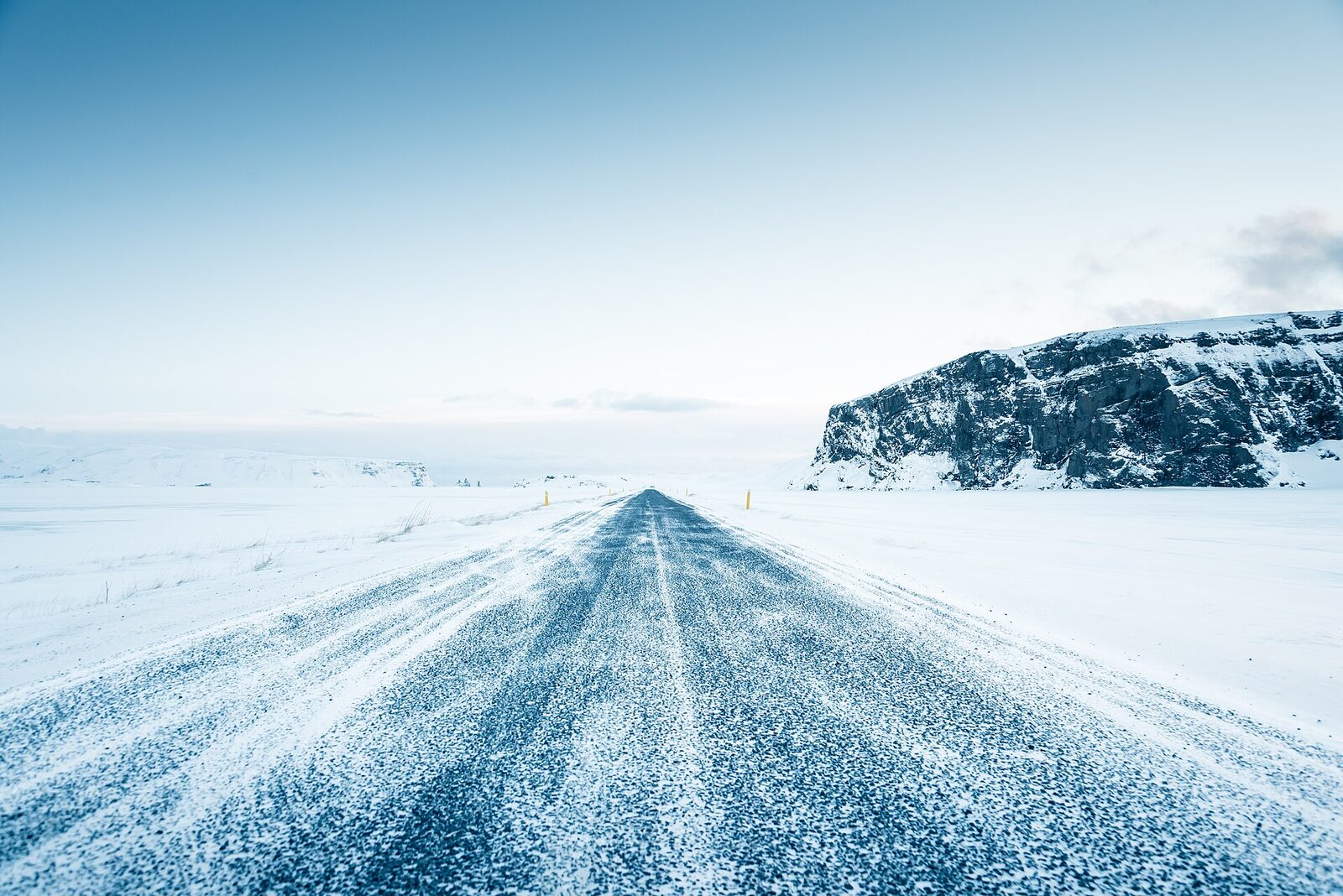
Fit proper winter tyres. That advice stands regardless of what follows, and nothing below softens it. But "winter tyres are required by law in Iceland from 1 November to 15 April" - which is what almost every guide says, and what this page said until we checked the regulations - is wrong twice over. There is no legal duty to fit a winter tyre at all, and the date is a day out. What the law actually requires is more interesting, and in some ways stricter.
What The Law Actually Requires
Three separate obligations do the work that people attribute to a single winter-tyre rule: a tread depth minimum tied to the calendar, a grip requirement tied to the state of the road, and a seasonal restriction on studs.
| Rule | What the regulation says |
|---|---|
| Are winter tyres mandatory? | No. No Icelandic regulation requires a tyre marked or marketed as a winter tyre - there is no M+S or snowflake requirement anywhere in the law. The obligations below do the work instead, and in practice they mean you should fit proper winter tyres anyway. |
| Minimum tread depth | 3.0 mm from 1 November to 14 April inclusive, and 1.6 mm from 15 April to 31 October. Set by Reglugerð nr. 736/2014, which amended the vehicle construction regulation. Depth is measured on the main tread pattern covering the central 75% of the tread width. |
| When there is snow or ice on the road | Reglugerð nr. 822/2004, article 16.02, requires snow chains or, depending on conditions, other equipment that provides grip - naming coarse-tread tyres (winter tread), with or without studs, as an example. This duty is triggered by the actual state of the road, not by the date. |
| Studded tyres | Prohibited from 15 April to 31 October inclusive, "unless required by driving conditions". That prohibition window is what makes 1 November to 14 April the normally permitted period. Police have stated publicly that studs may be used outside it when conditions demand. If any wheel is studded, all must be. |
| Penalties | 20,000 ISK per unfit tyre under the fines regulation, charged to the owner, with the driver liable for half. The same 20,000 ISK per tyre applies to using studs outside the permitted window. For a four-tyre car that is 80,000 ISK. A 25% discount applies if paid within 30 days. |
Why this matters in practice. The grip requirement is triggered by conditions, not by the date, so a car with legal tread that cannot hold the road in snow is still in breach - and conversely, studs are lawful outside their window when conditions genuinely demand them. Read together, the rules point at exactly one sensible course of action: proper winter tyres, in good condition, for the whole trip.
Daylight Is The Real Constraint
Most winter trips are limited by light long before they are limited by grip. Rural Icelandic roads are unlit, and a snowy road you can read comfortably at noon becomes a different problem at four in the afternoon.
| When | Daylight | Notes |
|---|---|---|
| Early November | About 8 hours, falling fast | Sunrise moves past 10:00 late in the month. |
| End of November | About 5 hours | True winter driving conditions are established. |
| 1 December | About 4¾ hours | Plan every drive inside the light. |
| 21 December (solstice) | About 4 hours | Sunrise near 11:20, sunset near 15:30. |
| 31 December | About 4¼ hours | Recovering, but barely. |
Plan each day's driving to finish inside that window, with slack for slow going. Our month pages go into the seasonal detail: November and December.
Wind, And The Damage Your Insurance Will Not Cover
Wind is the hazard visitors underestimate most, and the one that produces the most surprising bill. Icelandic gusts routinely catch a car door as it opens and bend it back past its hinges, and standard damage waivers exclude it. Blue Car Rental is one of the few operators that covers it, and only under its top-tier Liability Waiver, which names "wind blowing up the doors" explicitly. Most others do not cover it at any tier.
The practical defences are simple and worth taking seriously: park facing into the wind, hold the door with both hands when opening it, get out on the sheltered side, and brief your passengers before they reach for the handle. Our car rental insurance guide sets out which operators cover what, with the real excess figures.
Before Each Drive
Check umferdin.is for road status and closures, vedur.is for the Met Office's colour-coded warnings, and safetravel.is for travel alerts - on the morning of the drive, not the night before. Conditions in Iceland change over hours. Download the 112 Iceland app, tell someone your route, and carry warm clothing, food, water and a charged phone even for short legs.
If a road is marked closed, it is closed: driving past the sign carries a 20,000 ISK fine, voids your rental cover, and puts rescue volunteers at risk if it goes wrong. Our road conditions guide explains how to read each tool.
What Is Closed In Winter
All highland F-roads are shut through the winter, whatever you drive - they do not reopen until inspection in late May at the earliest, and our opening dates dataset has the record per road. Kjölur and Sprengisandur are closed too. Mountain passes on the Ring Road close intermittently in storms, sometimes for a day or more, which is the main reason to keep slack in a winter itinerary rather than booking tightly.
Related Guides
See rules of the road for the year-round legal detail, renting a car for vehicle choice, and the Ring Road for the winter version of the classic route. Winter is also the best season for hot springs and the aurora - the when to visit hub compares the months.
Frequently Asked Questions
Are Winter Tyres Required By Law In Iceland?
No, and almost every guide gets this wrong, including ours until we checked. Icelandic law contains no requirement to fit a tyre marked or sold as a winter tyre. What the regulations do require is a minimum tread depth of 3.0 mm from 1 November to 14 April, and, whenever there is actually snow or ice on the road, chains or tyres with a coarse winter tread that provide grip. Between them these effectively force proper winter tyres for any real winter trip, which is why the practical advice does not change: fit them.
What Tread Depth Is Legal In Iceland In Winter?
At least 3.0 mm from 1 November to 14 April inclusive, against 1.6 mm for the rest of the year. The figure comes from Reglugerð nr. 736/2014, which amended the vehicle construction regulation with effect from 1 November 2014, and it is measured on the main tread pattern across the central 75% of the tread. The fine for an unfit tyre is 20,000 ISK each, so 80,000 ISK for a whole car.
When Are Studded Tyres Allowed In Iceland?
The regulation is written as a ban rather than a permission: studs and chains may not be used from 15 April to 31 October inclusive, unless driving conditions require them. That makes 1 November to 14 April the normally permitted window. Many sources, including some official ones, paraphrase this as "to 15 April", which is a day out. Reykjavík discourages studs but does not ban them and charges no studded-tyre fee, despite a bill proposing one that was never passed.
How Much Daylight Is There For Driving In Winter?
Less than most visitors plan for. Reykjavík gets about 4¾ hours of daylight on 1 December, bottoming out near 4 hours at the solstice on 21 December, when the sun rises around 11:20 and sets around 15:30. November falls from roughly 8 hours to 5. Treat those as your entire driving window: rural roads are unlit, and driving a snowy road in the dark is a different task from driving it in daylight.
Do You Need A 4x4 To Drive In Iceland In Winter?
Not legally, and not for the paved south-west if you stay on main roads and watch the forecasts. A four-wheel drive gives better traction on packed snow and more composure in crosswinds, and it is the sensible choice for touring beyond the capital. What matters more than drivetrain is tyres, speed and the decision not to set out in a storm. The highland F-roads are closed all winter regardless of what you drive.
Will My Rental Insurance Cover Wind Damage To The Doors?
Usually not, and this is the most common winter claim visitors are surprised by. Icelandic gusts can catch an opening door and bend it back past its hinges, and standard waivers exclude it. Blue Car Rental is one of the few operators that covers it, and only under its top-tier Liability Waiver, which explicitly names "wind blowing up the doors". Always hold the door with both hands, park nose into the wind, and never let a passenger fling a door open.
What Should You Do If A Storm Hits While You Are Driving?
Slow down, put on hazard lights, and do not stop where you cannot be seen. Get to a town, petrol station or a proper pull-off and wait it out - reaching a booking on time is never worth it. Check vedur.is for warnings and umferdin.is for closures before you set out, not after. If you are stranded or in danger, call 112. Never drive past a closure sign; the fine is 20,000 ISK and the closure exists because the road is genuinely dangerous.
Sources
Tyre rules checked against Reglugerð nr. 822/2004 on the construction and equipment of vehicles, as amended by Reglugerð nr. 736/2014 for tread depth, with the Samgöngustofa consolidated text used to confirm the current wording; fines from Reglugerð nr. 1240/2019. Note that the reglugerd.is copy of 822/2004 shows the original 2004 text, so the 3.0 mm figure must be read from the 2014 amendment. Road status from umferdin.is, weather from the Icelandic Met Office, safety guidance from SafeTravel. Daylight figures calculated for Reykjavík and consistent with our December page. Rules and conditions change; confirm before you travel.
Last updated: 2026-08-08 · Reviewed against official sources.