River Crossings in Iceland
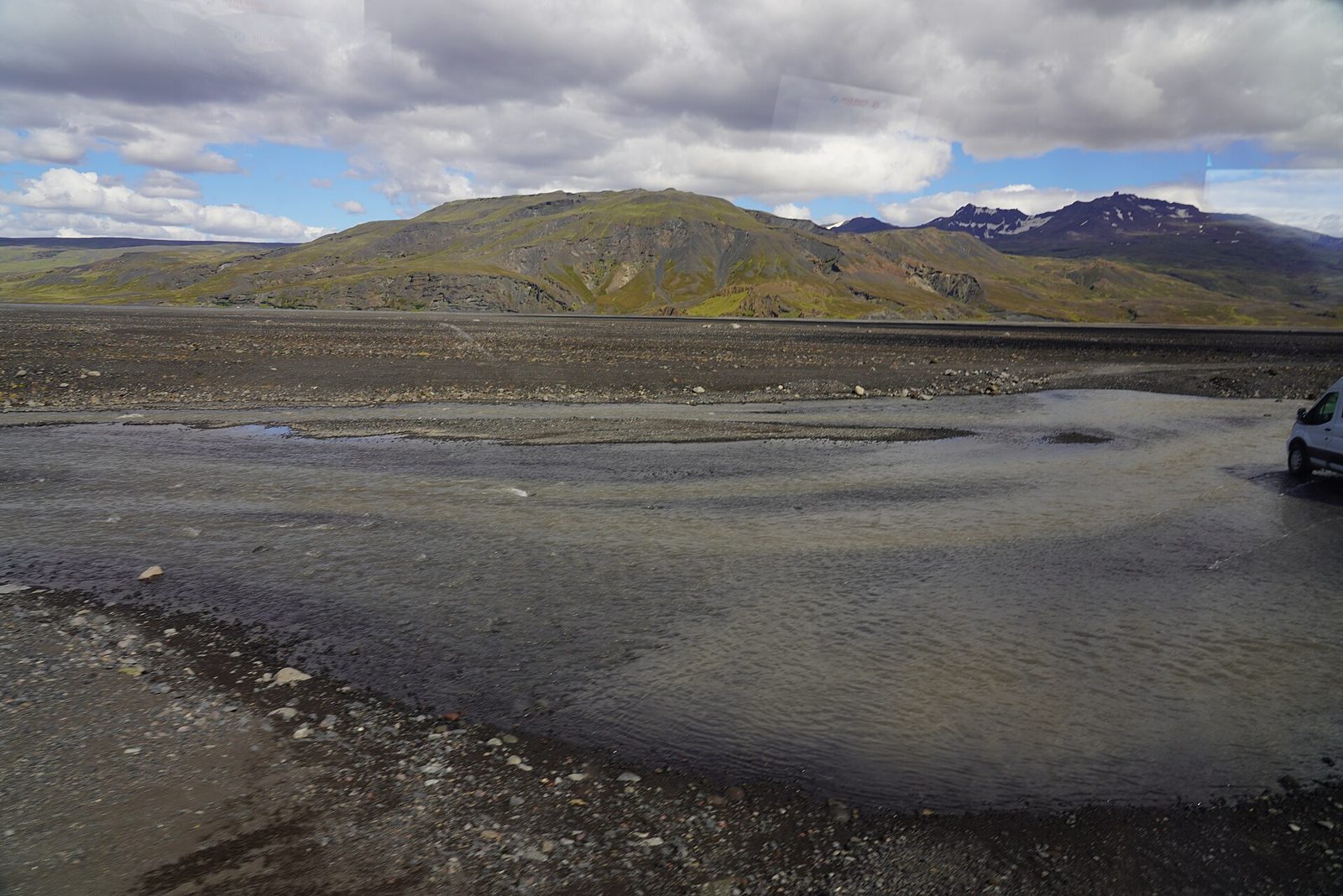
Unbridged river crossings are the defining hazard of Iceland's highland F-roads - by Vegagerðin's own definition, a mountain road is one that is exceptionally uneven, rough and steep, and/or has one or more unbridged river crossing that travellers must ford. They are also the mistake your insurance is least likely to forgive: SafeTravel's position is that no insurance anywhere covers water damage, and where operator terms disagree, we print both sides below. This guide covers how to judge whether a river is crossable, the technique for driving it, and when the only right answer is to turn back.
Before You Cross: Assess On Foot
Never drive into a river you have not judged from outside the car. Stop, get out, and walk the intended line if it is safe to wade: you are testing depth, current strength and how firm the bottom is. A useful limit is that water should never exceed roughly half your wheel height - about knee-deep on a standard 4×4. If you cannot stand comfortably in the river, your car has no business in it. Watching a comparable vehicle cross first is the next best check, and on busier fords - F208 South through Skaftártunga, or the final F224 crossings at Landmannalaugar - you rarely wait long. Note that the northern approach via road 208 has no unbridged rivers at all until those final campsite fords.
Reading The River
Rivers are shallowest where they are widest and calmest, because the same water is spread across more bed; narrow, fast, murky channels are the deep ones. Follow the established vehicle line where one exists - tracks into and out of the water mark the proven route, which often crosses at a slight downstream angle. Watch for large boulders around fords, which are hard to see from the driver's seat, and be more cautious when glacial silt turns the water opaque. Vegagerðin's advice to highland drivers is blunt and worth taking literally: practice on smaller rivers before attempting larger ones.
Crossing Technique
SafeTravel's published instruction (read 14 August 2026): "Be sure of the route you are going to take before entering the water. Put your car in a low-gear and cross the river slowly (5 km/h) and steady - do not switch gears while in the water!" Push a small, steady bow wave ahead of the bumper and keep the speed constant: stopping, shifting or accelerating midstream can flood the engine or dig the wheels into loose gravel. Angle slightly downstream where the track allows - SafeTravel warns that going against the current increases the risk of water entering the engine. If the car stalls in the river, do not restart it - water in the cylinders destroys the engine. Get everyone out safely, and call 112 if you are in danger.
Timing: Rivers Rise During The Day
Glacial rivers run lowest in the morning and rise through warm or sunny days as meltwater comes down, often peaking in the afternoon. SafeTravel's phrasing: current and depth change with glacial melt and precipitation, and rivers can become impassable after heavy rainfall - at any hour. Cross early, and remember that a ford you managed on the way in can be substantially higher on the way back. Some rivers, such as Krossá on F249 to Þórsmörk, also shift their bed daily, so yesterday's line proves nothing about today's.
Insurance: A Documented Disagreement
Whether anything insures a river crossing depends on who you ask, so here is what each source actually publishes:
| Source | Published position | What it means |
|---|---|---|
| SafeTravel (ICE-SAR) | "There's no insurance in the world that covers any damage that can be lead to crossing rivers or any body of water." | The official safety line: plan as if nothing covers you. |
| Höldur - Europcar Iceland | Lists as not covered: "Damages caused by driving in or across rivers or any kind of waterways. Such driving is totally the responsibility of the renter." | Blanket exclusion - matches SafeTravel. |
| Blue Car Rental | Excludes "damages caused by driving into waters and rivers" from every standard cover - but the exclusion "only applies if the renter has not opted for the Liability Waiver insurance." | Top-tier Liability Waiver covers water damage. |
| Lotus Car Rental | Its Platinum package lists "River Crossing Protection" among included covers. | Top-tier cover exists here too. |
Our advice: plan as if SafeTravel is right. Even the two top-tier covers are voided by negligence, and damage from driving where prohibited is never covered - which rules out banned fords such as Krossá on F249 whatever you bought. A drowned engine on an ordinary policy means paying for the car. Our car rental insurance guide sets out which tier does what, with the operators' own figures.
Related Guides
River crossings are part of the wider highland picture in our F-roads guide. For route-specific ford details, see F208 to Landmannalaugar and F249 to Þórsmörk; choose and insure the vehicle with renting a car, and check live status via the road conditions guide before setting out.
Frequently Asked Questions
Does Rental Insurance Cover River Crossings In Iceland?
The official and commercial answers disagree, and we publish both. SafeTravel, run by ICE-SAR, states there is no insurance in the world that covers damage from crossing rivers or any body of water, and Höldur (Europcar) excludes river and waterway damage outright. But Blue Car Rental's top-tier Liability Waiver explicitly lifts its water-damage exclusion, and Lotus's Platinum package lists River Crossing Protection. Plan as if SafeTravel is right: negligence voids even the top tiers, damage from driving where prohibited is never covered - which rules out banned fords like Krossá on F249 - and on any ordinary policy a drowned engine means paying for the vehicle. See our car rental insurance guide for what each tier includes.
How Deep A River Can You Cross In A 4x4?
A common rule of thumb is that the water should never exceed about half the wheel height of your vehicle - roughly knee-deep for a standard 4×4. Depth is only part of the picture: current strength and the riverbed matter as much, and SafeTravel notes that current and depth change with glacial melt and precipitation. Always walk the crossing first to test depth, current and bottom firmness before committing the car.
What Time Of Day Are Iceland's Rivers Lowest?
Glacial rivers are usually lowest in the morning and rise through warm, sunny days as glacier melt increases, often peaking in the afternoon and evening. Rain raises them at any hour - SafeTravel warns that rivers can become impassable after heavy rainfall. A ford you crossed easily at 9 AM can be impassable at 5 PM, so plan highland drives to cross early and allow for higher water on the return.
How Do You Actually Drive Through A River?
Pick the widest, calmest stretch - it is usually the shallowest. SafeTravel's instruction is to be sure of your route before entering the water, put the car in low gear, cross slowly at about 5 km/h and steady, and never switch gears in the water. A small bow wave in front of the bumper is the right pace. Cross at a slight downstream angle where the track allows: going against the current increases the risk of water entering the engine.
What Should You Do If You Are Unsure About A Crossing?
Do not cross. Wait for another suitable 4×4 and watch its line, ask rangers or hut wardens about conditions, or turn back. Vegagerðin's advice to highland drivers is to practice on smaller rivers before attempting larger ones. Never cross alone or outside daylight. If a river looks high, murky or fast, the safe answer is always the footbridge, another route, or another day. No destination in the highlands is worth drowning a car - or worse.
Sources
Crossing technique and the no-insurance statement quoted from SafeTravel's highland driving guidance (ICE-SAR); the F-road definition and practice advice from Vegagerðin's highland interior page; operator insurance positions from the published terms of Höldur (Europcar Iceland), Blue Car Rental and Lotus Car Rental. All sources read 14 August 2026. River levels change daily with weather and glacial melt; a road marked open does not mean its rivers are low. Always confirm conditions on the morning you drive.
Last updated: 2026-08-14 · Reviewed against official sources.