Landmannalaugar Hot Spring
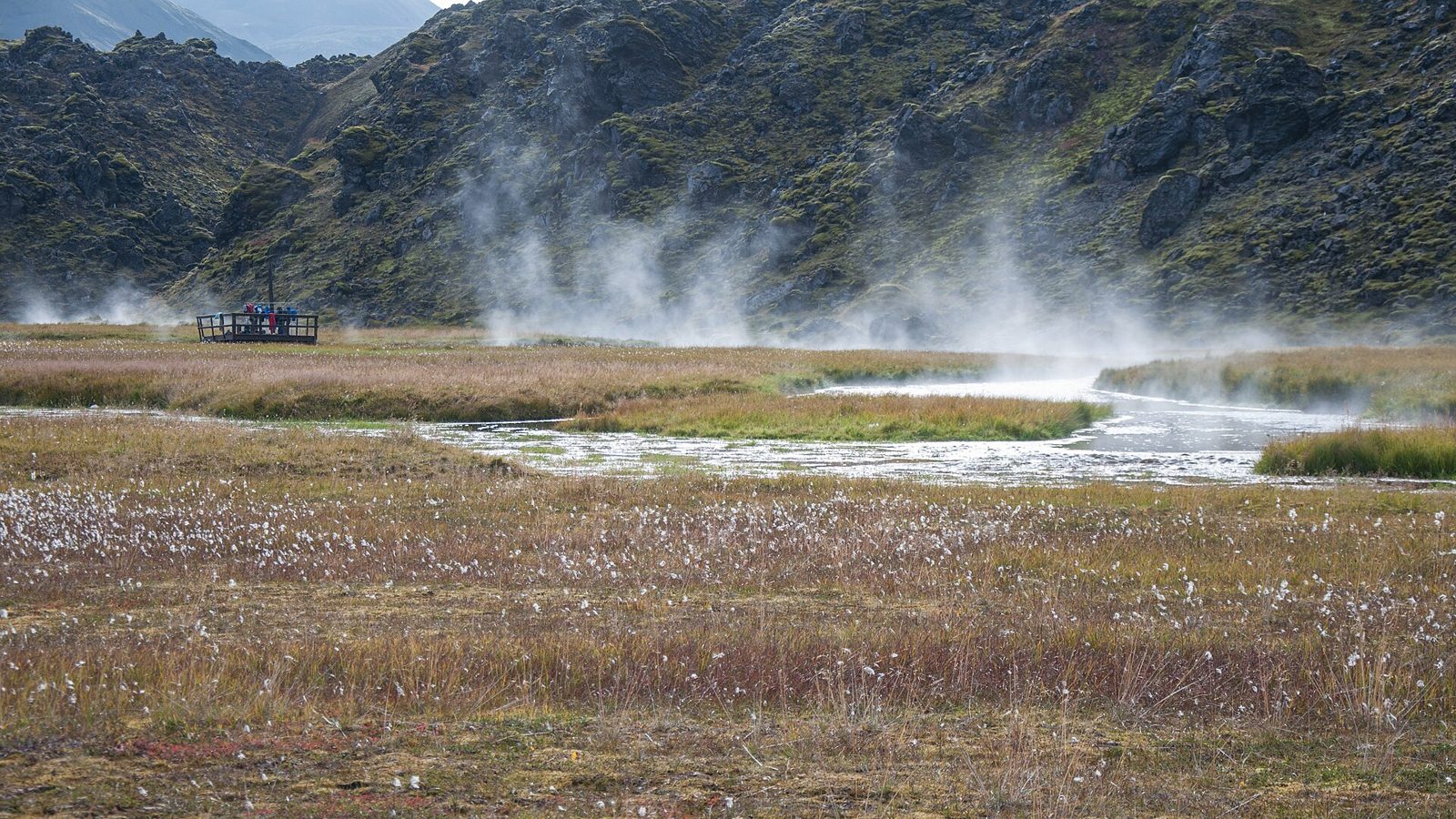
The hot spring at Landmannalaugar - the "people's pools" that gave the place its name - is Iceland's most famous free wild bathing spot: a warm brook in the Fjallabak Nature Reserve where geothermal springs mix with cold mountain water to a comfortable 36–40 °C, framed by rhyolite mountains and lava. It sits beside the highland hut and campsite at the end of F208/F224, reachable only in summer.
The Bathing Spot
A short boardwalk leads from the campsite to the brook. Hot springs - some near 80 °C - rise at the edge of the Laugahraun lava field and feed one side of the stream, so the water cools gradually as it mixes: bathe where it suits you, but never explore toward the hot inflows, where water and ground can scald. Depth is modest (sitting rather than swimming), the bottom is sandy with some algae, and the view over the rhyolite hills is the real luxury. Use no soap or shampoo in the water.
Costs: Free Bathing, Paid Everything Else
The spring itself costs nothing. The site charges a service/parking fee from about 1,500 ISK per standard car, showers run 500 ISK per five minutes, and camping costs 2,500–3,200 ISK per person per night (checked July 2026). The Ferðafélag Íslands mountain hut sleeps 78 and releases bookings in autumn for the following summer - peak dates go within hours. Arriving by bus and bathing costs you only the fare.
Getting There
Landmannalaugar is highland territory: a 4×4-only drive via F208, with the ford-free northern approach via road 208 ending in two river crossings on F224 just before the site - most drivers in ordinary 4×4s park before them and walk the footbridge. No car? Scheduled 4×4 highland buses run daily from Reykjavík roughly mid-June to mid-September, and day tours abound. The season follows the F-road openings: late June to September in a typical year. Check umferdin.is before setting out.
The Swimmer's Itch History
One documented caution: Landmannalaugar has experienced outbreaks of swimmer's itch (cercarial dermatitis), notably in 2003 and 2004, when larvae of bird parasites - traced to ducks raising young at the bathing site - caused itchy rashes in many bathers, peaking in late summer. The rash is unpleasant but harmless and clears on its own. Outbreaks are occasional rather than the norm; rangers post warnings when risk is elevated, so heed any signs at the site and dry off briskly after bathing.
While You Are There
Landmannalaugar is the trailhead of the Laugavegur, Iceland's most famous multi-day hike, and superb day walks start at the pools: Bláhnúkur's blue-black summit, the steaming slopes of Brennisteinsalda and the Laugahraun lava circuit all fit around a soak. The F208 southern route onwards past Eldgjá is among Iceland's great drives. More wild pools are in our regional hot springs directory - in the highlands, see also Hveravellir and Strútslaug.
Frequently Asked Questions
Is The Landmannalaugar Hot Spring Free?
Bathing itself is free - it is a natural warm brook, not a ticketed pool. What you pay for is getting and staying there: a service/parking fee from about 1,500 ISK per car at the site, showers at 500 ISK per five minutes, camping at 2,500–3,200 ISK per person, and hut beds through Ferðafélag Íslands. Day visitors arriving by bus can bathe without paying anything beyond the fare.
How Warm Is The Water?
Comfortably warm rather than hot: around 36–40 °C where most people bathe. Geothermal springs, some near 80 °C, feed one side of the brook and mix with cold streams, so the temperature varies noticeably from spot to spot and through the season - move a few metres to find your comfort zone. Nearer the hot inflows the water and streambed get dangerously hot, so do not explore upstream.
How Do You Get To Landmannalaugar Without A 4x4?
Take a summer highland bus or a day tour: scheduled 4×4 buses run daily from Reykjavík from roughly mid-June to mid-September, crossing the fords for you. If you drive, a 4×4 is required on the F-roads by every rental contract, and a 2WD there voids your cover; the ford-free northern approach is via road 208 and F224, with the option to park before the final crossings and walk the footbridge to the site. See our F208 guide for the routes.
When Is Landmannalaugar Open?
The site is reachable roughly from late June to September, whenever Vegagerðin opens the surrounding F-roads after inspection. Across 2021 to 2025 the northern approach, road 208 from Sigalda, opened between 23 May and 23 June, while the southern F208 from Eldgjá opened between 16 June and 6 July. Outside that window the roads are closed and the area effectively inaccessible except by special super-jeep tours. Check road status at umferdin.is on the morning you travel.
Is It Safe To Bathe There? What About Swimmer's Itch?
Generally yes, with two cautions. First, temperatures vary - stay in the established bathing area and away from the hot inflows. Second, Landmannalaugar has a documented history of swimmer's itch (cercarial dermatitis): in 2003 and 2004, outbreaks caused by bird-parasite larvae affected many bathers, worst in late summer when ducks raised young at the bathing site. It causes an itchy but harmless rash. Outbreaks are occasional, not constant - heed any warning signs posted by rangers, and consider towelling off briskly after bathing.
What Facilities Are There?
More than most wild springs: the adjacent Ferðafélag Íslands base has a 78-bed mountain hut (book months ahead - peak dates sell out within hours of release), a large first-come campsite, toilets and paid showers, and a small summer shop. There are no lockers or changing rooms at the spring itself beyond a simple platform, so most people change at the campsite facilities. Use no soap in the spring - showers exist for that.
Sources
Checked against Ferðafélag Íslands (hut, campsite and site services), umferdin.is (road status), and the peer-reviewed report of the 2003–04 swimmer's itch outbreaks by Skírnisson & Kolářová (Læknablaðið, 2005), in July 2026. Fees and season shift year to year; confirm current details before travelling.
Last updated: 2026-08-02 · Reviewed against official sources.