Reykjadalur Hot Spring Thermal River
Reykjadalur is a geothermal valley above the town of Hveragerði in South Iceland, where a naturally hot river is warm enough to bathe in. The valley lies within the Hengill volcanic system at roughly 64.0220° N, 21.2105° W, about 45 km southeast of Reykjavík. Reaching the bathing spot requires a hike of around 3 km each way; both the walk and bathing are free.
What Is Reykjadalur?
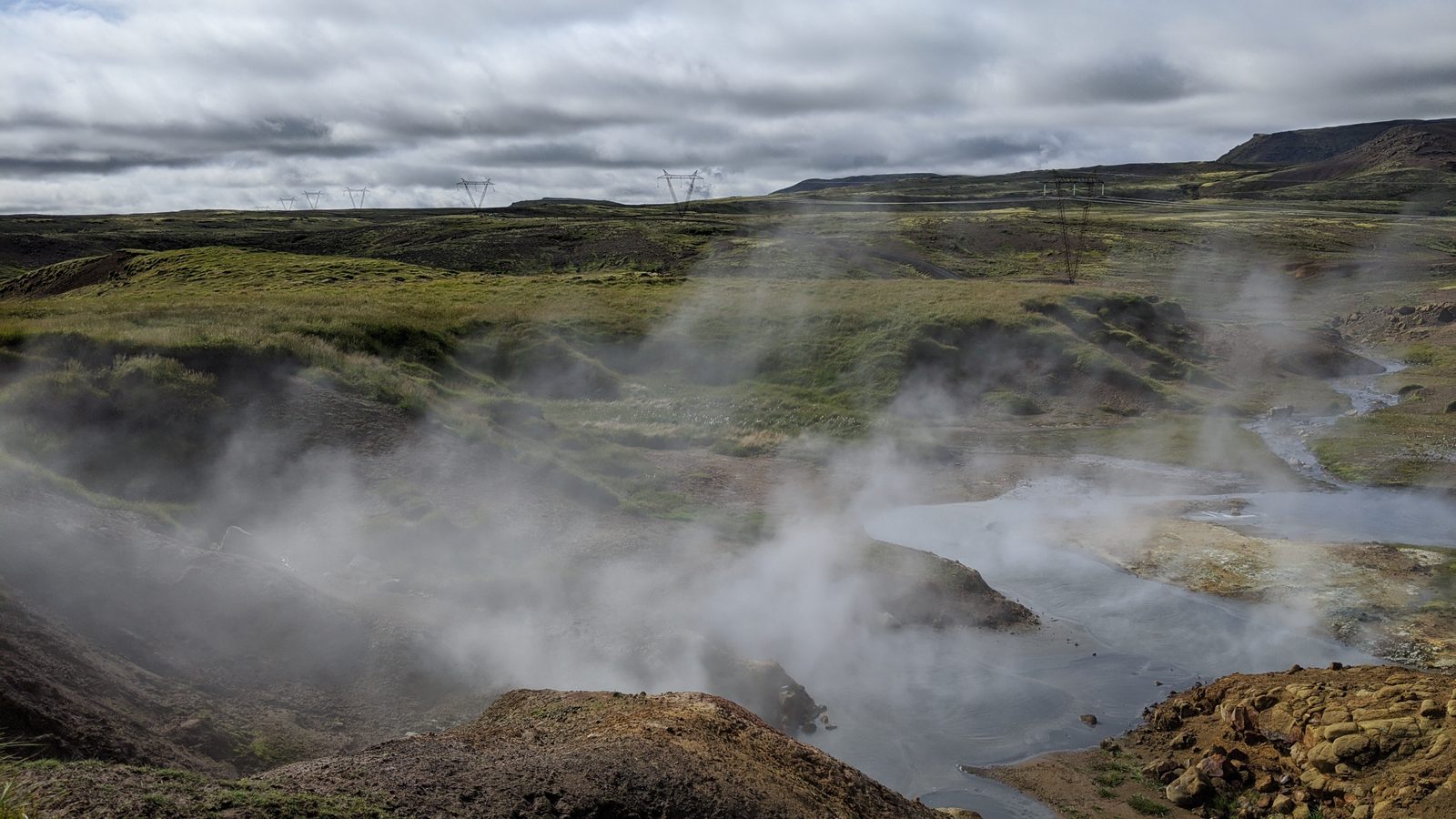
Reykjadalur, meaning "steam valley", is an active geothermal area where a warm river collects enough heat to bathe in safely. The valley sits on the western edge of the Hengill volcanic system, one of Iceland's most geothermally active regions. Steam vents, bubbling mud pots and the Djúpagilsfoss waterfall line the route up to the bathing section near Klambragil. One clarification worth making: the hot river is not the same as Reykjaböð Hot Springs, the new ticketed lagoon that opened on 5 September 2026 a few hundred metres from the trailhead car park - the river is free, natural and requires the hike; Reykjaböð is a developed bath at the valley mouth.
Where Is Reykjadalur And How Do You Get There?
Reykjadalur is reached from a trailhead car park about 2 km north of Hveragerði, roughly 45 km southeast of Reykjavík along Route 1. Drive into Hveragerði and follow signs uphill to the Reykjadalur car park, then continue on foot. Without a car: Strætó buses 51 and 52 stop in Hveragerði, leaving a 40–50 minute walk (or short taxi) to the trailhead, and guided hikes run from Reykjavík. A café with toilets and a card machine stands at the car park.
How Long Is The Reykjadalur Hike?
The hike to the bathing area is about 3 km each way, with roughly 200 m of ascent, and takes most people 45–60 minutes uphill. The path is well-trodden but steady in gradient, with some narrow and muddy sections. Allow 3–4 hours in total to walk both ways and spend time soaking in the river.
The Trail At A Glance
| Stage | Distance | Time from start | What to know |
|---|---|---|---|
| Trailhead car park | 0 km | 0 min | Café, toilets, paid parking (app or card). The path starts across the footbridge. |
| Djúpagilsfoss waterfall | ≈1 km | ≈15–20 min | The steepest climbing is in this first stretch, with the gorge and waterfall below. |
| Steam vents and mud pots | ≈2 km | ≈30–40 min | Active geothermal ground - stay strictly on the path; fenced features scald. |
| Bathing area (near Klambragil) | ≈3 km | ≈45–60 min | Boardwalk, changing screens, and the warm river at ≈36–40 °C. Warmer upstream, cooler down. |
How Hot Is The Water?
The bathing section sits at roughly 36–40 °C (97–104 °F), close to a warm bath. One official measurement exists: 37.7 °C, taken at the lowest pool on 27 June 2017 by Heilbrigðiseftirlit Suðurlands. That is a single reading at one point on one day, not a monitored figure, and the river is not uniform - it cools as it runs downstream, so move down to cool off and never bathe above the marked bathing area, where temperatures scald. Test the water with a hand before getting in.
The often-quoted figures for how hot the water runs before it mixes - a cold tributary at one side of Ölkelduhnúkur and a very hot one at the other - come from the municipality's own planning document for the valley, which attributes them to a road guidebook and to a named individual writing in 2003 rather than to any measurement body. We have not been able to trace them to a measurement, so we do not print them as data.
What Is Known About The Water
One official water test exists for Reykjadalur, and it is a reassuring one. It is also nine years old, which is not a lapse by anyone - it follows from how Iceland regulates natural bathing places generally. Constructed pools are sampled under Reglugerð nr. 814/2010, which expressly does not apply to natural sites. Those come under Reglugerð nr. 460/2015, which requires an operating licence and routine sampling only at sites in classes 1 and 2. Reykjadalur has no operator, so it falls in class 3, where 12. gr. provides for no routine sampling unless the local health committee sees a specific reason. That is the ordinary position for free natural pools across the country, not something particular to this valley; our hot springs guide sets out both regimes in full.
Heilbrigðiseftirlit Suðurlands sampled the lowest pool anyway, on 27 June 2017, and Matís ohf analysed it (certificate R17016550003). The results, against the limits in viðauki I of 460/2015 for freshwater:
| Measure | Result | Class 3 limit | Strictest limit (class 1) |
|---|---|---|---|
| Intestinal enterococci | 5 | 330 | 200 |
| Saurkólígerlar (E. coli) | 42 | 900 | 500 |
| Pseudomonas aeruginosa | 0 | Not set | Not set |
| Temperature at sampling | 37.7 °C | Not set | Not set |
| pH | 7.52 | 5–10.5 | 5–10.5 |
It passed comfortably. Faecal indicator bacteria were present at low levels - 42 against a limit of 900 - and the sample would have met the stricter standard set for licensed class 1 sites too, where the ceiling is 500. The certificate records it as meeting the requirements of 460/2015. Take it for what it is: a good result, from one summer day, describing the river as it was then rather than as it is now. We publish the figures and the date so you can weigh them yourself.
When Is The Best Time To Visit?
The most comfortable months are late May to September, when the trail is snow-free and daylight is long. The valley is open year-round, but winter brings ice, snow and limited daylight, and the climb can be hazardous without proper footwear. Visiting early or late in the day helps avoid the busiest midday crowds in summer.
Practical Information And Safety
Stay on marked paths at all times: geothermal ground off the trail can collapse or scald. Facilities are minimal, with wooden changing screens but no toilets or food at the river. Bring a towel, swimwear, water and warm layers. Check the forecast at en.vedur.is and trail conditions at safetravel.is before setting out.
Nearby And Related
Reykjadalur is one of several natural hot springs in our guide to Iceland's hot springs you can bathe in. The valley pairs well with a stop in Hveragerði, a geothermal town on the way back to Reykjavík - where Reykjaböð Hot Springs, a new ticketed lagoon and bathhouse at the foot of this same valley, opened on 5 September 2026. For how we check and date these facts, see our editorial & fact-checking policy.
Frequently Asked Questions
Is Reykjadalur Free To Visit?
Hiking to Reykjadalur and bathing in the thermal river are free. You only pay to park at the trailhead car park above Hveragerði, where parking is charged through a payment app. There is no entry fee, ticket or booking for the valley or the hot river itself. Optional guided hikes from Reykjavík cost extra.
Do You Have To Pay For Parking At Reykjadalur?
Yes. Parking at the Reykjadalur trailhead is paid via the Parka or EasyPark apps, or a card machine on the café building - cash is not accepted. Published rates vary between about 200 and 300 ISK for the first hour, with a typical 3–5-hour visit costing around 1,000 ISK (checked August 2026). Rates change periodically, so confirm the price signed at the car park.
How Long Does The Reykjadalur Hike Take?
The hike to the bathing area is roughly 3 km each way and takes most people 45–60 minutes uphill, with about 200 m of ascent. Allow 3–4 hours in total to walk both ways and spend time in the river. The return downhill is quicker, but wear sturdy, waterproof footwear as the path can be muddy.
Can You Visit Reykjadalur In Winter?
Yes, but with caution. The trail is open year-round, but in winter it can be icy, snow-covered and exposed to harsh weather. Use crampons or spikes, check the forecast at en.vedur.is and conditions at safetravel.is, and turn back if visibility or footing is poor. Daylight is very limited in midwinter.
Is Reykjaböð The Same As The Reykjadalur Hot River?
No - and the two are easy to confuse because they share the valley mouth. Reykjaböð Hot Springs is a ticketed geothermal lagoon and bathhouse that opened on 5 September 2026, a few hundred metres from the Reykjadalur trailhead car park, with changing rooms, saunas and a restaurant - no hike required, admission from about 7,900 ISK. The Reykjadalur hot river is the free, natural bathing stream a 3 km hike up the valley. They pair well: hike and bathe in the river, then finish at the lagoon by the car park.
Is The Water At Reykjadalur Tested For Cleanliness?
Once, in 2017, and the result was good. Heilbrigðiseftirlit Suðurlands sampled the lowest pool on 27 June 2017 and Matís analysed it: 5 intestinal enterococci and 42 saurkólígerlar (E. coli) per 100 ml, a clear pass well inside the 330 and 900 limits that applied, and inside the stricter 200 and 500 limits set for licensed sites too. There is no requirement to repeat it, and that is normal rather than an oversight. Constructed pools are sampled under reglugerð nr. 814/2010, which does not apply to natural sites; those come under reglugerð nr. 460/2015, which requires routine sampling only at licensed class 1 and class 2 sites. Reykjadalur has no operator, so it sits in class 3, where no routine sampling is provided for - the same position as most free natural pools in Iceland. The 2017 figures describe the river on that day rather than today.
Who Is Responsible For Safety At Reykjadalur?
Responsibility works differently from a lagoon, and it is worth knowing before you go. There is no operator, no admission and no licence, and so no lifeguard duty - the continuous supervision rule people picture sits in reglugerð nr. 814/2010, the regulation for constructed pools, which does not reach natural sites. The regulation that does cover them, nr. 460/2015, contains no supervision requirement and no maximum water temperature anywhere in its text; its only scald safeguard is a discretionary power for the local health committee to put up warning signs where there is a risk of burns from hot water. The municipality maintains the path and the boardwalk, and the trail is covered by the usual mountain-safety services, but in the water you are on your own. Bathe with someone, test the temperature by hand, and stay below the marked bathing area.
Are There Changing Facilities At The Hot River?
Facilities are minimal. The bathing area has a wooden boardwalk and simple changing screens beside the river, but there are no heated buildings, lockers or showers, and usually no toilets at the river itself. Toilets are normally available back at the trailhead car park. Bring a towel, water and warm layers, and pack out all rubbish.
Sources
The water-quality section is read from primary sources: the sampling certificate published by Heilbrigðiseftirlit Suðurlands (R17016550003, analysed by Matís ohf), and the regulations themselves - Reglugerð nr. 460/2015 for the class scheme, sampling rules and viðauki I limits, and Reglugerð nr. 814/2010 for the pool rules that do not apply here. Read 6 September 2026. Other facts were checked against SafeTravel Iceland (safety and conditions), the Icelandic Met Office (weather), and the town of Hveragerði. Facts re-verified August 2026; published parking rates currently vary between sources (≈200–300 ISK per hour), so confirm the price signed at the car park before your visit.
Last updated: 2026-09-07 · Reviewed against official sources.